Laser Mold Cleaning — Tire, Injection & Precision Molds
Clean residue, vulcanization, release agent and carbon build-up out of tire, injection and rubber molds — often in-line, without teardown. Pulsed energy lifts the contamination while leaving the cavity, vents and surface texture intact.
.png)
Cleaning a mold should not cost you the mold
Dry ice, blasting, ultrasonic and chemical cleaning all work — but each brings teardown, downtime or a slow risk to the tooling itself.
Teardown & downtime
Pulling a mold for blasting or ultrasonic cleaning means lost production hours every cycle.
Cavity & precision wear
Blasting media and abrasives slowly erode the cavity surface and dull fine detail.
Blocked vents
Media and debris can pack into vent slots, hurting the very venting you need to keep clear.
Chemicals & residue
Solvent cleaning leaves residue and waste, and ultrasonic baths still need teardown and handling.
Clean the mold, protect the tooling
A pulsed laser is absorbed by the residue, not the steel beneath it — so it clears contamination without the abrasion that wears a cavity. Because there is no media and no bath, it often cleans in place, and in many cases while the mold is still warm.
In-line cleaning
Clean in place without full teardown — and often hot.
No cavity wear
No abrasive media touching the precision surface.
Clears vents & texture
Reaches vent slots and textured faces cleanly.
No media residue
Nothing left in the mold to flush or wipe out.
Mold types & the build-up it removes
From tire cavities to injection tooling. Actual result depends on the contaminant, mold material, laser power and scanning width, so we confirm it on your mold.
Tire molds
Clean cavities, sipes and vents between cycles.
Injection molds
Remove residue and gas stain from plastic tooling.
Rubber molds
Strip vulcanization residue and build-up.
Die-cast molds
Clear release agent and carbon from die surfaces.
Build-up it removes:
Less downtime, longer mold life
For mold shops and molders, the cost is rarely the cleaning itself — it is the production hours and tooling wear around it.
- Less downtime — in-line cleaning keeps the mold in the press instead of on the bench.
- Longer mold life — no abrasive wear means the cavity holds its precision over more cycles.
- Preserved venting & texture — vents stay clear and textured faces keep their finish.
- No media to manage — nothing to buy in, contain or clean out of the mold afterwards.
Pulsed precision for mold work
Mold cavities are precision surfaces, so this is pulsed territory — controlled energy that clears build-up without touching the tooling.
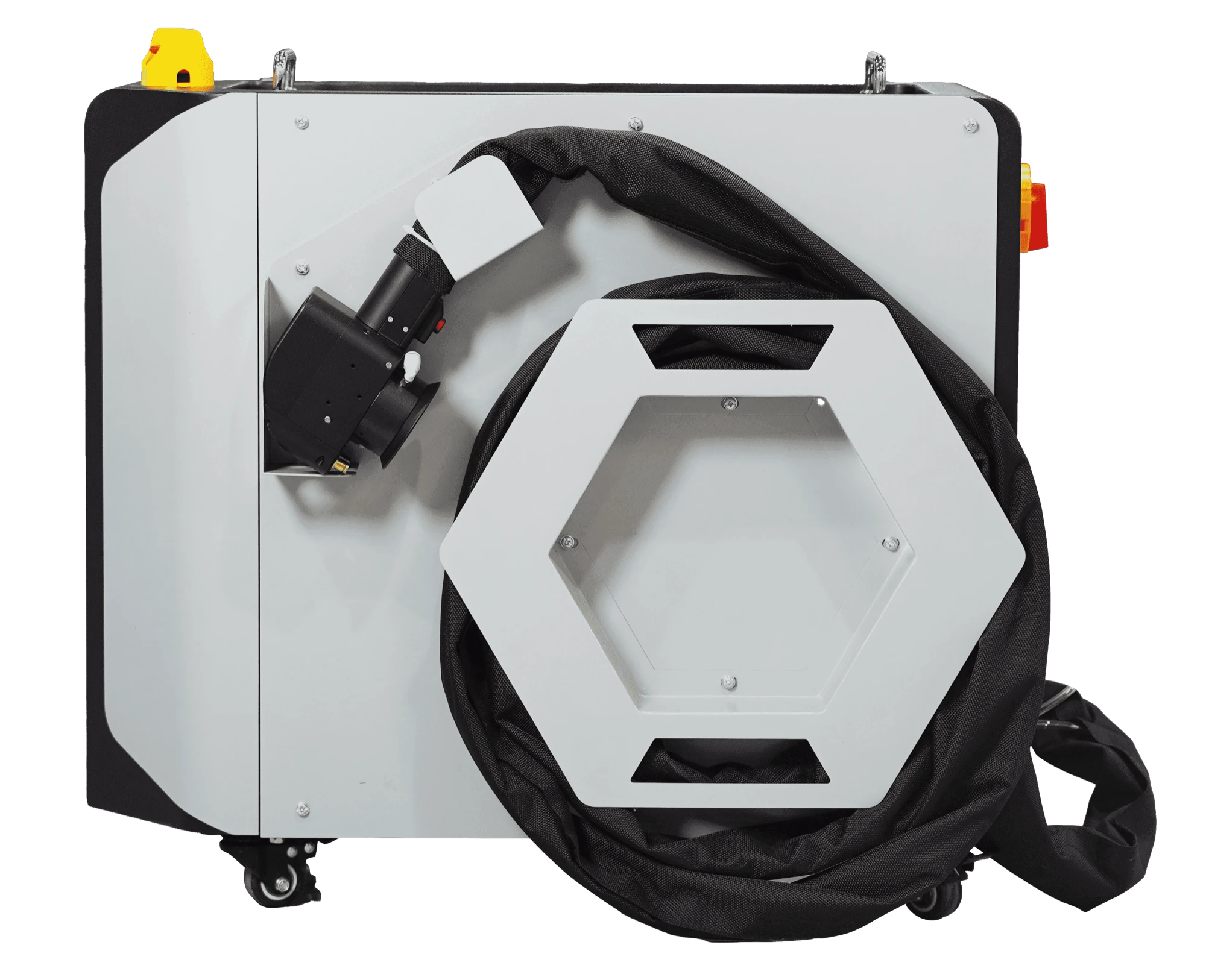
Pulsed — LY100-500W
An air-cooled pulsed platform with a handheld head and adjustable pulse, frequency and scan width — tuned to clear residue from cavities, vents and textured faces without abrasion. The 300W pulse build is a common choice for mold work.
- 100–500W pulsed, configurable (300W popular)
- Adjustable scan width for cavities & detail
- Air-cooled, no water loop to manage
How laser mold cleaning compares
Structural differences that hold across most tire, injection and rubber mold cleaning.
| Factor | Laser | Dry ice | Sandblasting | Chemical / ultrasonic |
|---|---|---|---|---|
| Teardown needed | Often none — in-line | Sometimes | Usually | Yes (bath) |
| Cavity wear | None — no abrasion | Low | Abrasive wear | Low |
| Vents & texture | Reaches & preserves | Can pack vents | Can block / erode | Varies |
| Residue / waste | No media residue | Low residue | Spent grit | Chemical waste |
Mold making, molding & tooling
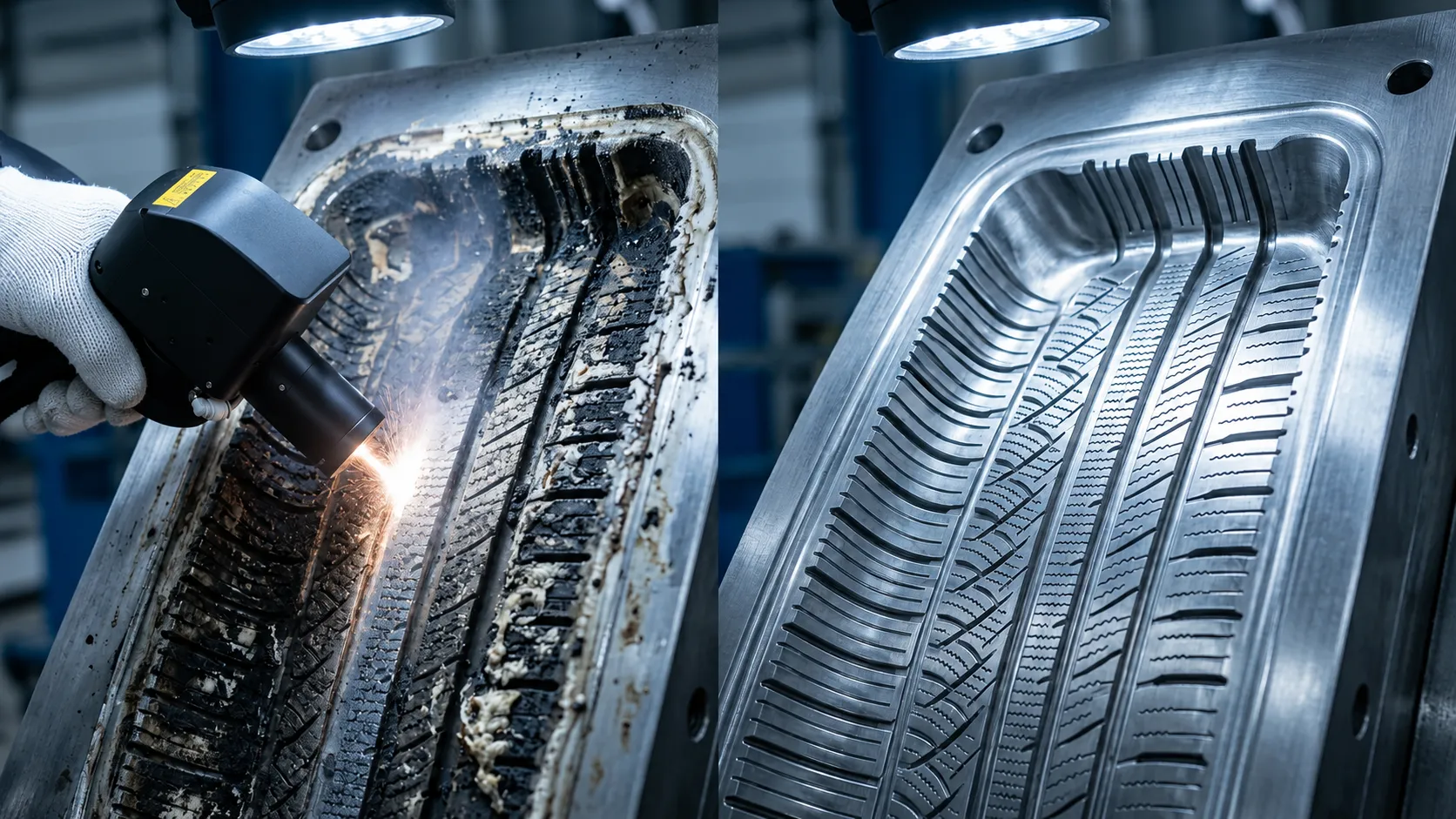
Mold-cleaning results
Representative before/after results on tire and injection molds.
Materials & conditions matrix
Mold types and the build-up the pulsed process clears — often in-line, without abrasion to the cavity.
| Mold type | Build-up | Suggested approach |
|---|---|---|
| Tire mold | Rubber & vulcanization residue | Pulsed, in-line |
| Injection mold | Resin residue & gas stain | Pulsed |
| Rubber mold | Cured residue | Pulsed |
| Die-cast mold | Release agent & carbon | Pulsed |
The result on any combination depends on the material, contaminant, laser power and scanning setup — confirmed on a representative sample.
The workflow, step by step
Cleaning a mold without costing the mold — the in-line workflow.
Assess mold & cavity access
Identify the build-up, the cavity detail and whether it can be cleaned in place.
Sample piece test
We clean a representative mold or sample and review cavity, vents and texture.
Set pulsed parameters
Energy tuned to the residue, with scan width set to the detail.
Clean — in-line or on the bench
Often in place and while warm, without abrasive media.
Inspect vents & texture
Confirm vents are clear and the surface finish preserved.
Typical project considerations
What mold shops weigh when the cavity is precision tooling.
In-line, less downtime
Clean in place without full teardown, often hot.
No cavity wear
No abrasive media touching the precision surface.
Vents & texture
Reaches vent slots and textured faces without packing them.
No media residue
Nothing left in the mold to flush or wipe out.
Related machines & solutions
Laser mold cleaning questions, answered straight
Send your mold details and get a factory-direct quote
Tell us your mold type and the build-up you need to clear. We will recommend a pulsed configuration, offer sample testing, and send pricing — usually within one business day.
- sales@lasercleanerpro.com
- +86 153 2715 5363
- Mon–Sat 9:00–18:00 (GMT+8)