Laser Oil & Grease Removal — Industrial Degreasing
Strip cutting oil, anti-rust oil, release agent and grease off parts without solvents or wastewater. Dry laser degreasing cleans steel, aluminium and composites selectively — often in-line — leaving a clean surface ready for bonding, coating or assembly.
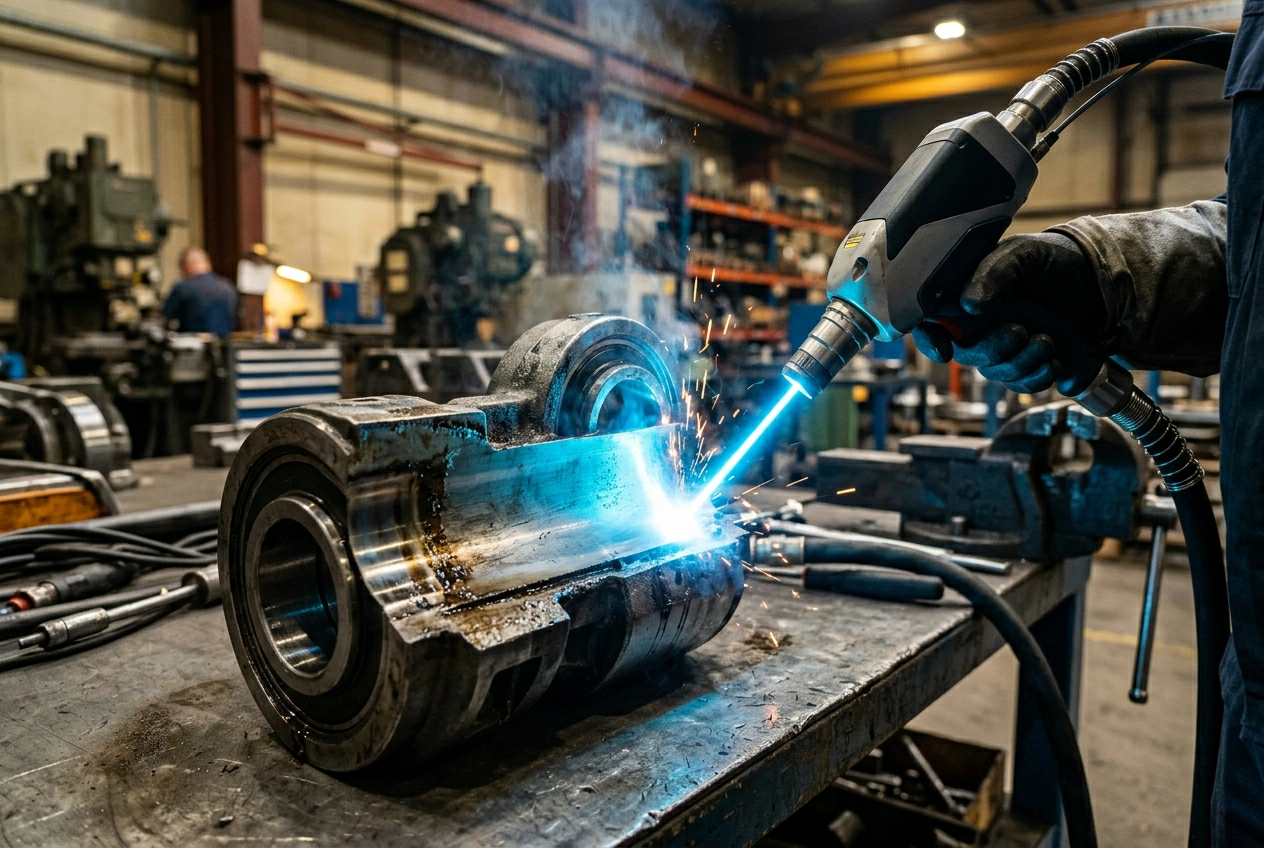
Traditional degreasing is wet, slow and regulated
Getting a part clean enough to bond or coat usually means solvents or a wash line — and a tail of handling, drying and waste behind it.
Solvent degreasing
Solvents mean ventilation, PPE, flammability handling and hazardous-waste disposal — slow and tightly regulated.
Aqueous & ultrasonic
Water-based and ultrasonic baths need drying time and generate wastewater that has to be treated.
Drying & handling
Wet processes add dwell, rinse and dry steps that slow the line and add handling between operations.
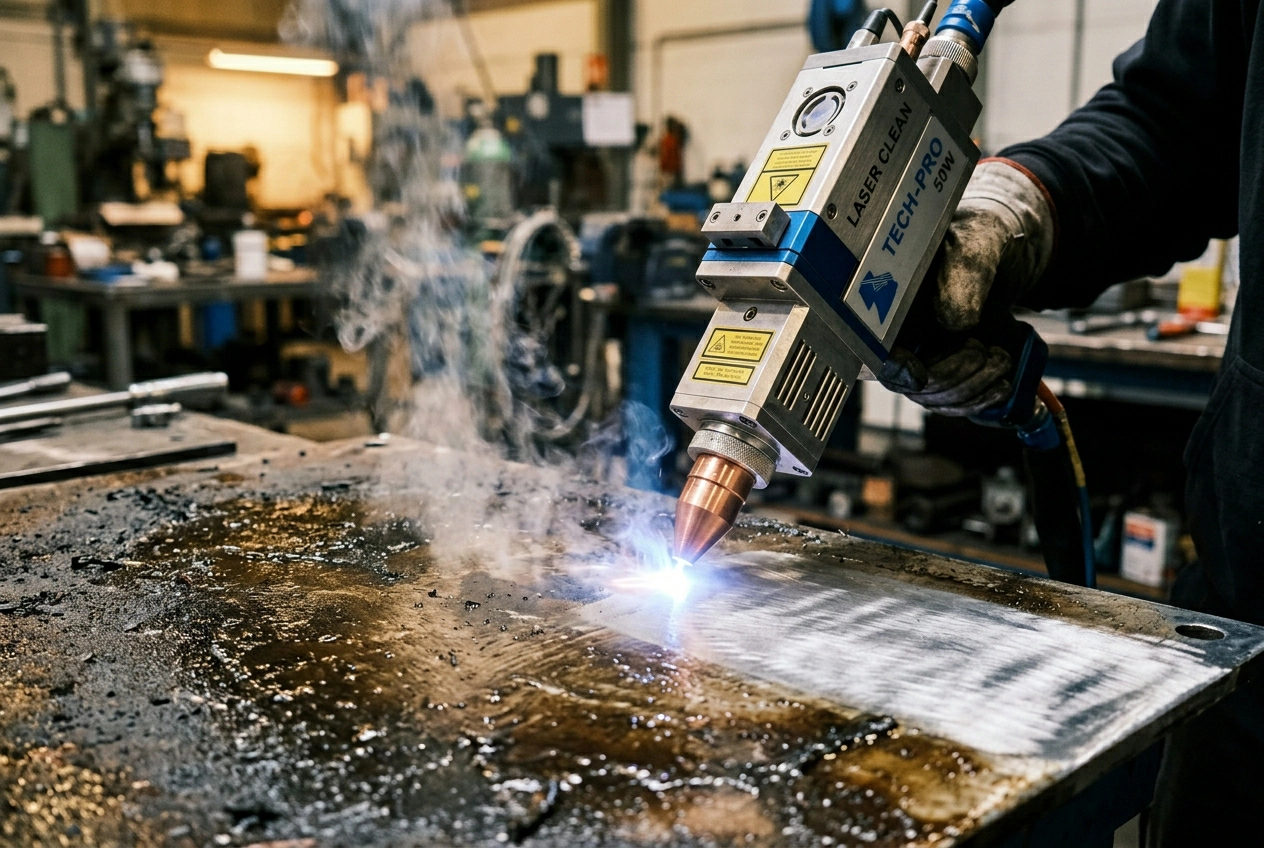
Lift the oil film, leave a dry, clean surface
The laser delivers energy to the oil or grease film, which vaporizes and is carried off by fume extraction — no solvent, no bath and no drying step. Because it is dry and directed, you can clean just the area that needs it, and run it in-line between operations.
- Dry process — no solvent, no wastewater
- Selective — clean only the bonding or coating area
- In-line capable, no dwell-and-dry step
How completely it cleans depends on the oil type and thickness, the substrate, laser power and scanning width — we confirm it on your part.
Oils & films it strips — and from what
The everyday contaminants that stand between a part and a sound bond or coating. Result depends on the oil and substrate, confirmed by testing.
Cutting & machining oil
Residual cutting and coolant oil after machining.
Anti-rust oil
Protective oils applied for storage and transport.
Release agent
Mold release residue on formed and cast parts.
Fingerprint & grime
Handling oils and light grime before assembly.
Suitable substrates:
Outcome on each substrate depends on the oil type, film thickness, laser power and scanning setup — confirmed by sample testing.
A cleaner surface bonds and coats better
Bonding, welding and coating all fail on a contaminated surface. Dry laser degreasing gives the next operation a clean, oil-free base to work with — without leaving solvent residue of its own.
Better bond adhesion
A clean, dry surface for adhesives and tapes to grip.
Stronger coating prep
Oil-free metal for paint and coating to adhere to.
Cleaner welding
Remove oil before welding for fewer defects. See weld prep.
No residue of its own
No solvent film left behind to interfere later.
Pulsed for parts, CW for large areas
Detailed parts and selective spots favour pulsed control; large surfaces and high volume lean on continuous-wave throughput.
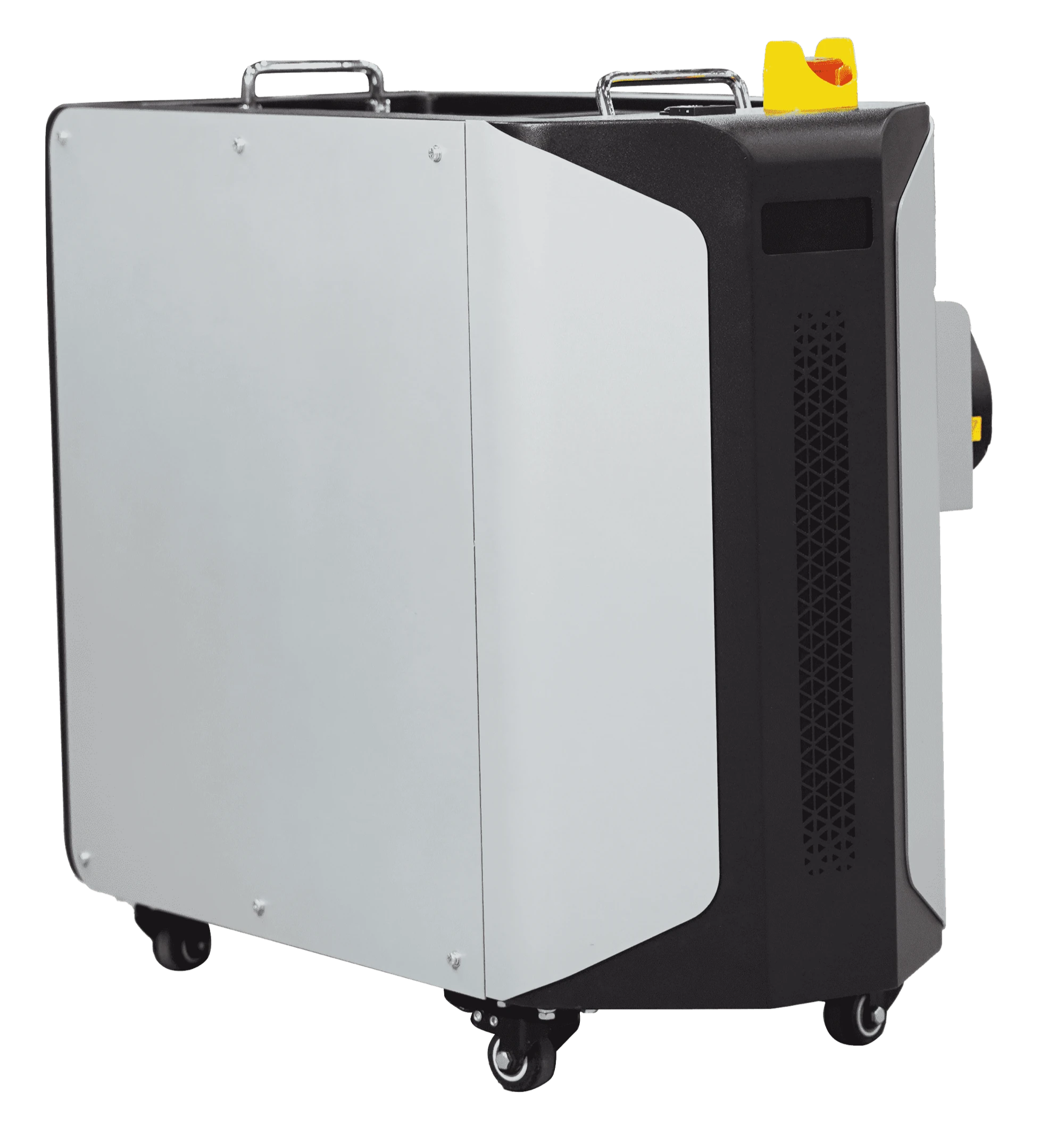
Pulsed — LY100-500W
Controlled degreasing of detailed parts, bonding areas and aluminium where selectivity matters.
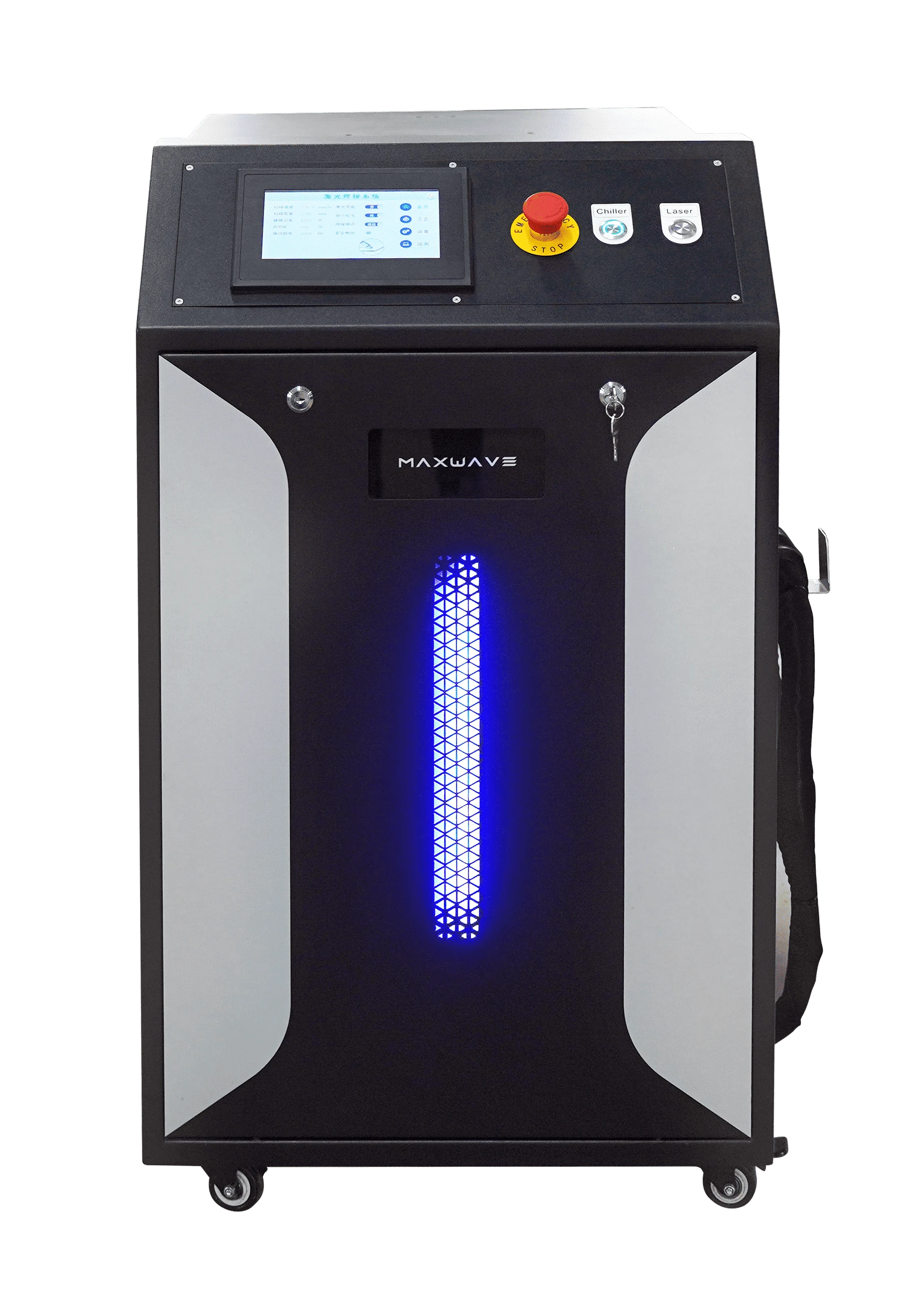
High-power CW — LCW / HW
1000–3000W throughput for degreasing large surfaces and high-volume production work.
How laser degreasing compares
Structural differences that hold across most industrial degreasing work.
| Factor | Laser | Solvent | Ultrasonic | Aqueous |
|---|---|---|---|---|
| Solvents / chemicals | None | Solvent per job | Cleaning agents | Detergents |
| Wastewater / waste | Dry — minimal | Hazardous waste | Wastewater | Wastewater |
| In-line use | Yes — no dry step | Possible, ventilated | Batch process | Batch + dry |
| Selectivity | Spot-selective | Whole part | Whole part | Whole part |
| Surface for bonding | Dry, residue-free base | Can leave film | Needs drying | Needs drying |
Degreasing results
Representative before/after results on oiled and greasy parts.
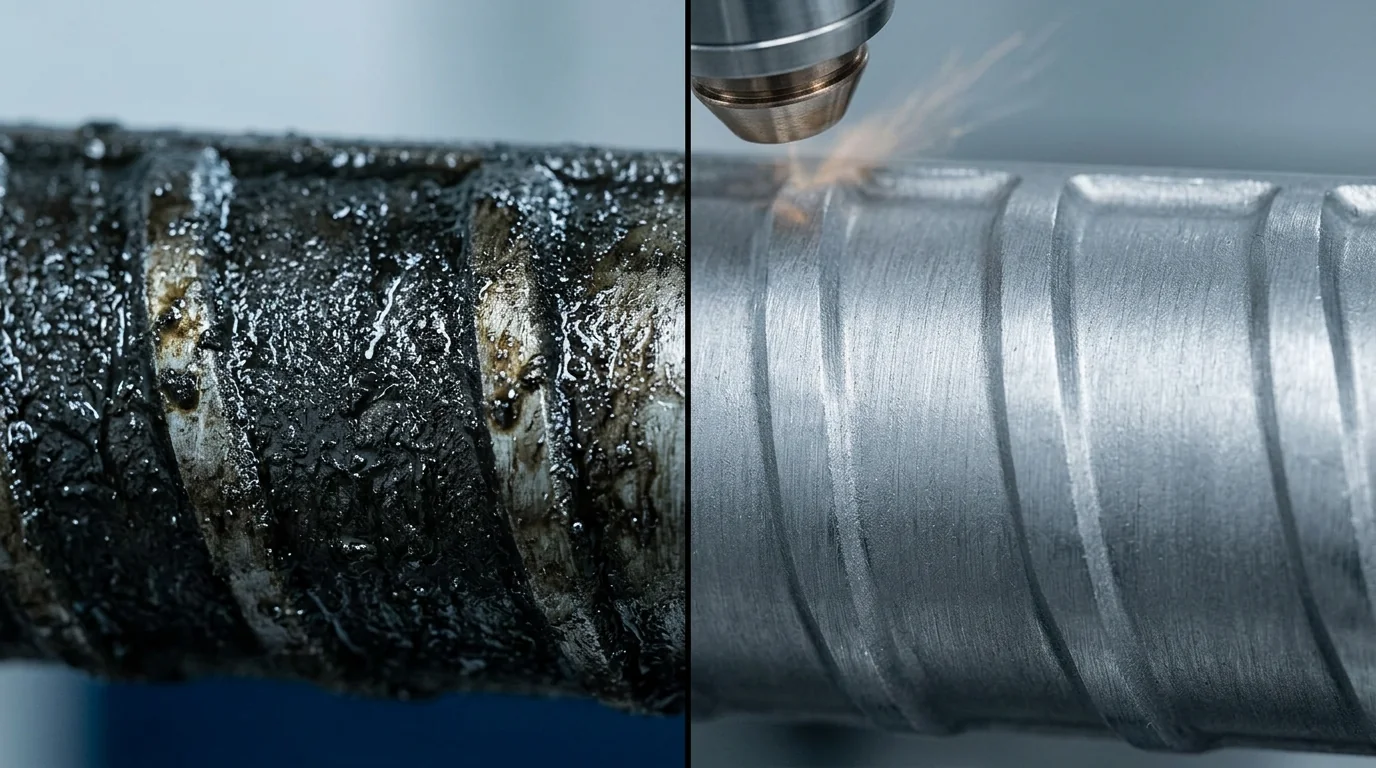
Materials & conditions matrix
Oils and films the dry process removes, and the substrates it cleans for the next operation.
| Substrate | Oil / film | Suggested approach |
|---|---|---|
| Steel | Cutting & machining oil | Pulsed / CW, selective |
| Aluminium | Anti-rust oil | Pulsed, fine |
| Composite / parts | Release agent | Pulsed, tested |
| Assembled parts | Fingerprint & grime | Pulsed, spot |
The result on any combination depends on the material, contaminant, laser power and scanning setup — confirmed on a representative sample.
The workflow, step by step
Dry degreasing to a bond- or coat-ready surface — step by step.
Assess oil, substrate & next step
Identify the film, the material and whether bonding, coating or welding follows.
Sample test
We degrease a sample and confirm the surface for the next operation.
Set selective parameters
Pulsed for parts and detail, continuous-wave for larger areas, cleaning only where needed.
Degrease — often in-line
Dry, directed cleaning between operations, no bath or drying step.
Inspect readiness
Confirm an oil-free, residue-free surface ready to bond or coat.
Typical project considerations
What process engineers weigh when the part has to bond or coat.
Dry, no wastewater
No solvents or wash line, no drying step.
Selective & in-line
Clean only the bonding or coating area, between operations.
Better adhesion
An oil-free, residue-free base for adhesives and coatings.
No film of its own
No solvent residue left to interfere later.
Related machines & solutions
Laser degreasing questions, answered straight
Send your part and get a factory-direct quote
Tell us the oil or grease, the substrate and what happens next. We will recommend pulsed or continuous-wave, offer sample testing, and send pricing — usually within one business day.
- sales@lasercleanerpro.com
- +86 153 2715 5363
- Mon–Sat 9:00–18:00 (GMT+8)